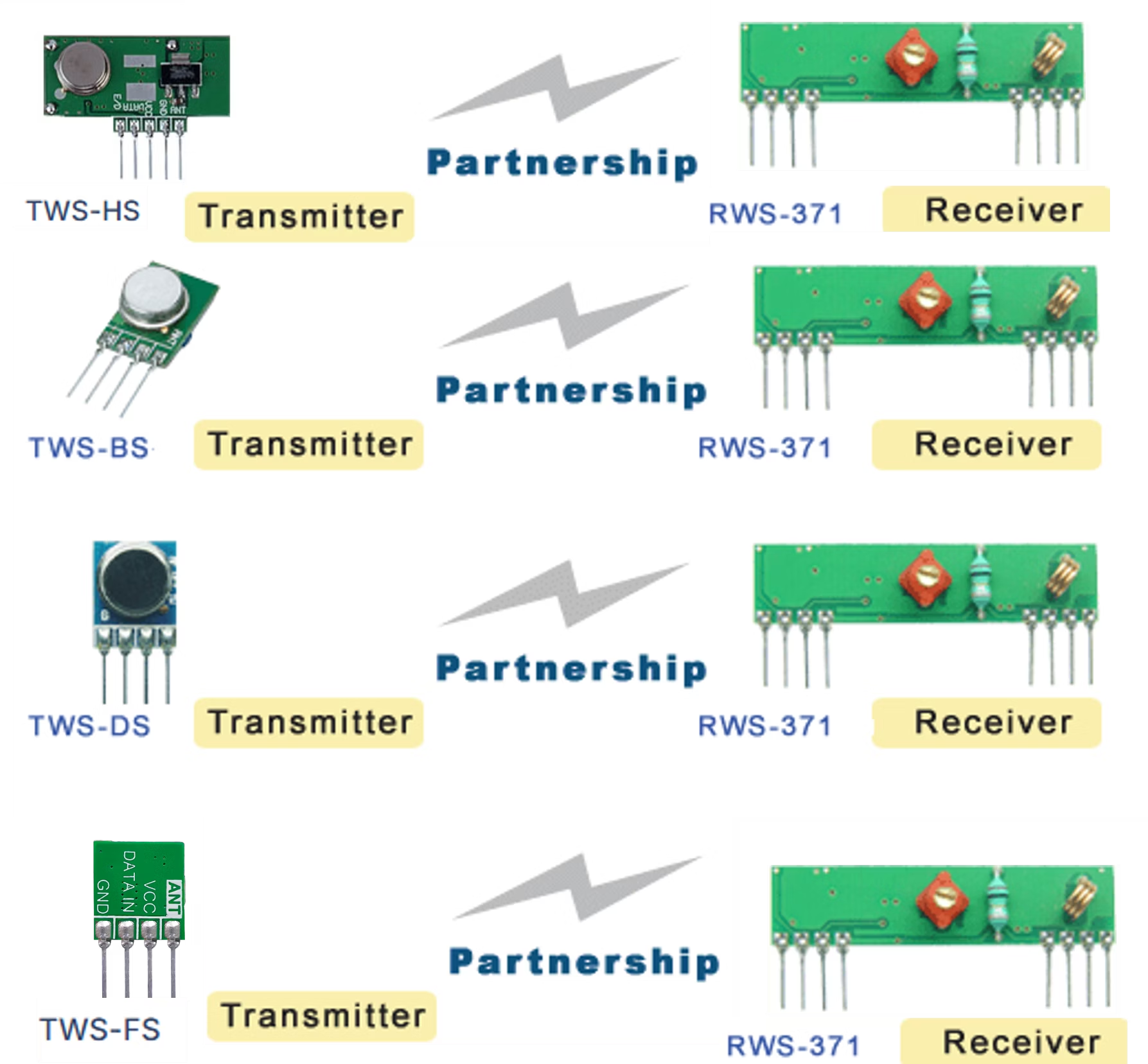
ASK Super-Regenerative High Frequency Receiver Module
Model: RWS-371 (Series)
A super-regenerative ASK high-frequency RF receiver module specifically designed for wireless communication. With advanced super-regenerative technology, it offers excellent reception sensitivity and stability. It features up to six frequency versions (303MHz~434MHz), perfectly meeting local regulations and diverse application needs.
Core advantage: minimal external components and highly integrated design, significantly reducing system development complexity and cost. The module uses an LC resonant circuit and a precise RF front-end, achieving a maximum reception sensitivity of -110dBm, ensuring reliable wireless communication quality even in harsh environments. Widely applied in: security systems, wireless remote control, industrial automation, long-distance data transmission, and other critical fields.
Complete Specification Comparison Table
The RWS-371 series offers six frequency versions, each precisely calibrated and thoroughly tested to ensure compliance with stated specifications. The following is a complete technical parameter comparison to help you quickly choose the most suitable version:
Specification Item
RWS-371-1
RWS-371-2
RWS-371-3
RWS-371-4
RWS-371-5
RWS-371-6
Operating RF Range
(MHz)
303.325 ~ 304.325
309.5 ~ 310.5
314.5 ~ 315.5
317.5 ~ 318.2
417.5 ~ 418.5
433.4 ~ 434.4
Modulation Method
ASK
ASK
ASK
ASK
ASK
ASK
Circuit Type
LC
LC
LC
LC
LC
LC
Data Transfer Rate (bps)
4800
4800
4800
4800
4800
4800
Operating Voltage (V)
4.9 ~ 5.1
4.9 ~ 5.1
4.9 ~ 5.1
4.9 ~ 5.1
4.9 ~ 5.1
4.9 ~ 5.1
Operating Current (mA)
4.5 (Typ.)
4.5 (Typ.)
4.5 (Typ.)
4.5 (Typ.)
4.5 (Typ.)
4.5 (Typ.)
Sensitivity (dBm)
-108 (Typ.)
-106 ~ -110
-106 ~ -110
-106 ~ -110
-106 ~ -110
-106 ~ -110
Channel Bandwidth (KHz)
±500
±500
±500
±500
±500
±500
Baseband Data Rate (KB/S)
3 (Max.)
3 (Max.)
3 (Max.)
3 (Max.)
3 (Max.)
3 (Max.)
Receiver Startup Time (ms)
3 (Max.)
3 (Max.)
3 (Max.)
3 (Max.)
3 (Max.)
3 (Max.)
*All models adopt the same digital output specifications: high level is VCC − 0.5 V or above, and the maximum low level is 0.3 V, ensuring stable compatibility with standard logic circuits.
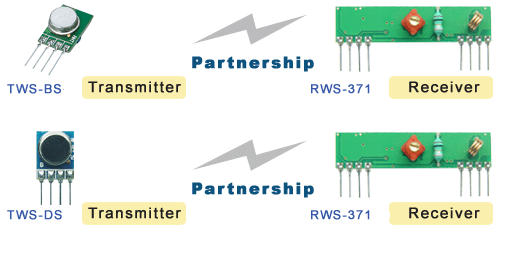
Transmitter and Receiver Pairing Reference
To ensure optimal system performance, RWS-371 series receiver modules must be used with corresponding frequency transmitters. The following pairing table provides a complete model correspondence to help you quickly establish a reliable wireless communication link:
Matching Transmitter Module Model
Operating Frequency
Receiver Module Model
TWS-BS、TWS-DS
303.875 MHz
RWS-371-1
TWS-BS、TWS-DS
310.000 MHz
RWS-371-2
TWS-HS、TWS-BS、TWS-DS、TWS-FS
315.000 MHz
RWS-371-3
TWS-BS、TWS-DS
318.000 MHz
RWS-371-4
TWS-BS、TWS-DS
418.000 MHz
RWS-371-5
TWS-HS、TWS-BS、TWS-DS、TWS-FS
433.920 MHz
RWS-371-6
Pin Definition and Wiring Instructions
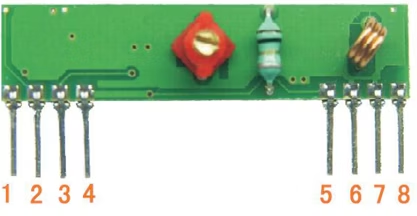
Pin Function Description
The RWS-371 series adopts a standardized pin configuration, simplifying the system integration process. Each pin is meticulously designed to ensure optimal electrical performance and anti-interference capability.
Pin
Function
1
GND
2
Digital Output
3
Linear Out
4
VCC
5
VCC
6
GND
7
GND
8
ANT(About 13cm)
Power Input (VCC)
Standard 5V power input. It is recommended to use a regulated power supply with a filter capacitor to ensure stable operation.
Ground (GND)
System ground terminal. Good grounding connection should be ensured for optimal RF performance.
Antenna Input (ANT)
RF signal input terminal. An appropriate antenna is required to achieve optimal reception.
Data Output (DATA)
Demodulated digital signal output, which can be directly connected to a microcontroller or other digital circuits.

Important Note: When performing PCB layout, it is recommended to maintain an appropriate distance between the antenna trace and digital signal lines, and to add suitable filter circuits to the power input to ensure stable operation of the module in complex electromagnetic environments.
Application Areas: Security and Remote Control Systems
The RWS-371 series demonstrates excellent performance in security and remote control applications. Its high sensitivity ensures reliable wireless communication quality in various environments. The module's low-power design makes it particularly suitable for security devices that require long standby times.
Security Receiver Host

  • Wireless anti-theft alarm system receiver
  • Door and window sensor signal reception
  • Emergency button wireless signal processing
  • Multi-zone monitoring system integration
The super-regenerative receiver architecture provides excellent sensitivity, ensuring reliable reception of alarm signals even in weak signal environments, providing a solid communication foundation for security systems.
Wireless Remote Control Devices
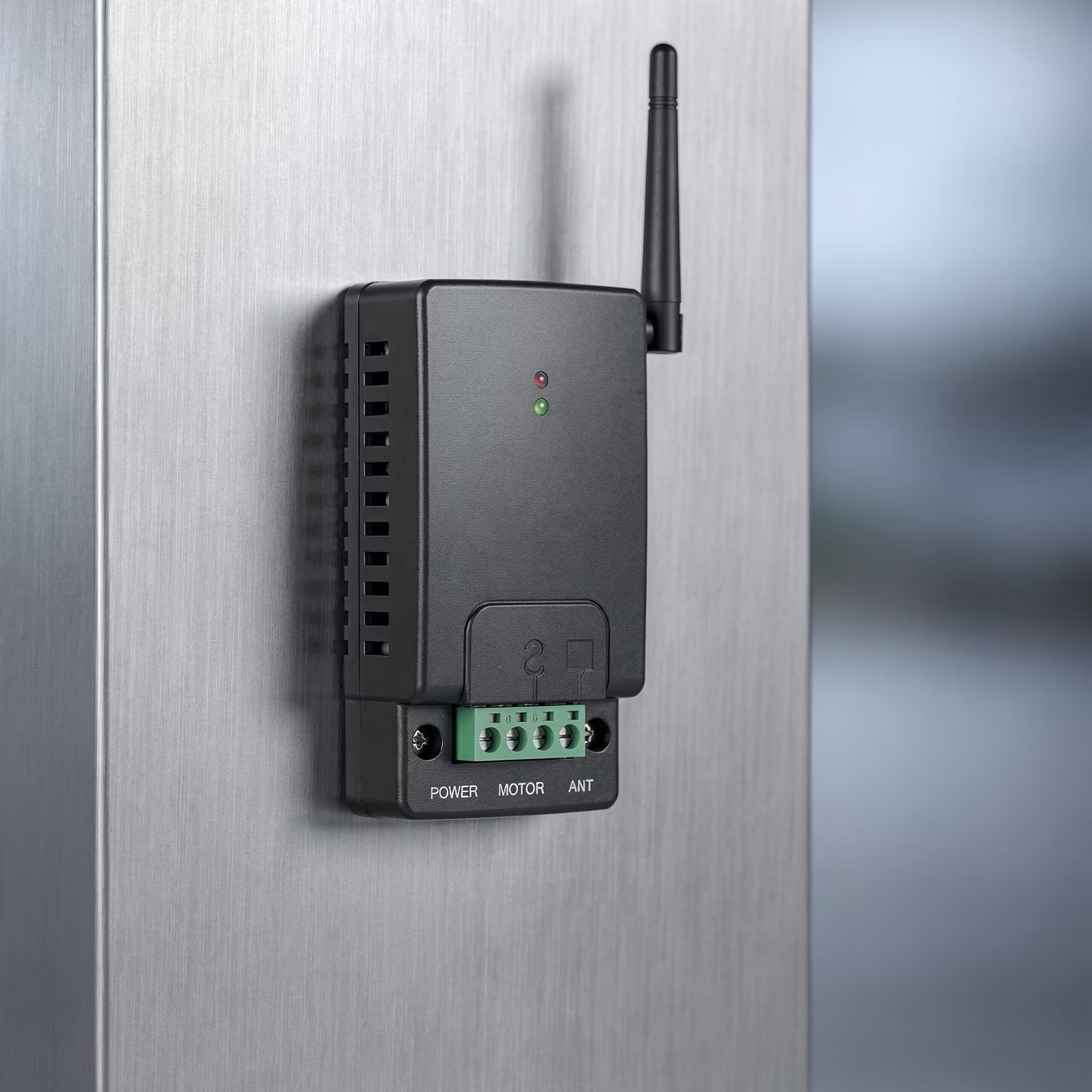
  • Garage door remote control receiving system
  • Electric rolling door control receiver
  • Industrial equipment wireless remote control
  • Smart home control integration
The fast startup time (maximum 3ms) ensures immediate response to remote control commands, while the wide receiving range provides users with greater operational flexibility and convenience.
Applications: Automation and Data Reception
In industrial automation and remote data reception applications, the RWS-371 series demonstrates its core advantages of stability and reliability. The module supports data transmission rates up to 4800bps, meeting the needs of most industrial monitoring and data acquisition.
Automation Equipment Control
Used for wireless control and monitoring of production line equipment, reducing wiring costs and enhancing system flexibility. Supports multi-point to one-point data collection architecture for centralized monitoring and management.
Remote Data Reception
Used for remote data acquisition applications such as environmental monitoring, weather stations, and agricultural sensing. Excellent reception sensitivity ensures maximum communication range in open environments.
Wireless Telemetry System
Suitable for various telemetry and monitoring systems, providing stable data transmission channels. Low power consumption design, combined with intermittent operating modes, can significantly extend the battery life of battery-powered systems.
Selection and System Integration Guide
Selecting the appropriate RWS-371 model and integrating it correctly into your system are crucial steps to ensure wireless communication quality. Below are comprehensive selection considerations and system design recommendations:
Frequency Legality Confirmation
First, confirm the wireless frequency band regulatory requirements of the target market and select the frequency version that complies with local regulations. Regulations for ISM bands vary by country and region.
Transmitter Pairing Match
Select the corresponding transmitter model based on the pairing table to ensure accurate matching of transmit and receive frequencies. It is recommended to perform complete communication test verification at the initial stage of system design.
Antenna Configuration Design
Select the appropriate antenna type and length; antenna performance directly affects the communication distance and reliability of the system. It is recommended to use a 1/4 wavelength monopole antenna or its multiples.
Interference Evaluation and Protection
Evaluate the electromagnetic interference situation of the operating environment, and add filtering or shielding measures if necessary. Appropriate PCB layout and grounding design can effectively improve anti-interference capability.

Key System Integration Points
Power Supply Design
  • Use a stable 5V power supply
  • Add appropriate decoupling capacitors
  • Ensure power ripple is within specifications
PCB Layout
  • Minimize RF trace length
  • Good ground plane design
  • Isolate digital and analog signals
Testing and Verification
  • Actual communication range verification
  • Testing under different environmental conditions
  • Long-term stability evaluation
For more detailed technical support or customized solutions, please contact our technical team. We will provide professional integration advice and comprehensive technical documentation support.