Motorcycle Parking Management
Motorcycle Parking Detection and Guidance
Help employees, shoppers and students find available spaces
Combine individual space detection, local status lights and entrance availability displays for business sites, shopping centres and educational campuses. Help riders choose an area with available spaces before following local indicators to a parking spot.
Central management provides zone status and usage records to support peak-hour guidance, parking allocation and capacity planning.
Discuss your motorcycle parking projectA clearer route from the entrance to an available space
Closely spaced motorcycle bays and peak-hour arrivals can make available spaces difficult to locate. Individual-space information connects entrance displays, zone guidance and local lights so riders can make better routing decisions.
01 Check availability
Read remaining spaces by floor or zone at the entrance.
02 Follow local indicators
Use space-status lights to identify where to park.
03 Update occupancy
Sensor readings update the management system, lights and availability information.
04 Manage by zone
Operators review occupancy and guide arrivals when areas become full.
Applications for businesses, shopping centres and campuses
Business sites and employee parking
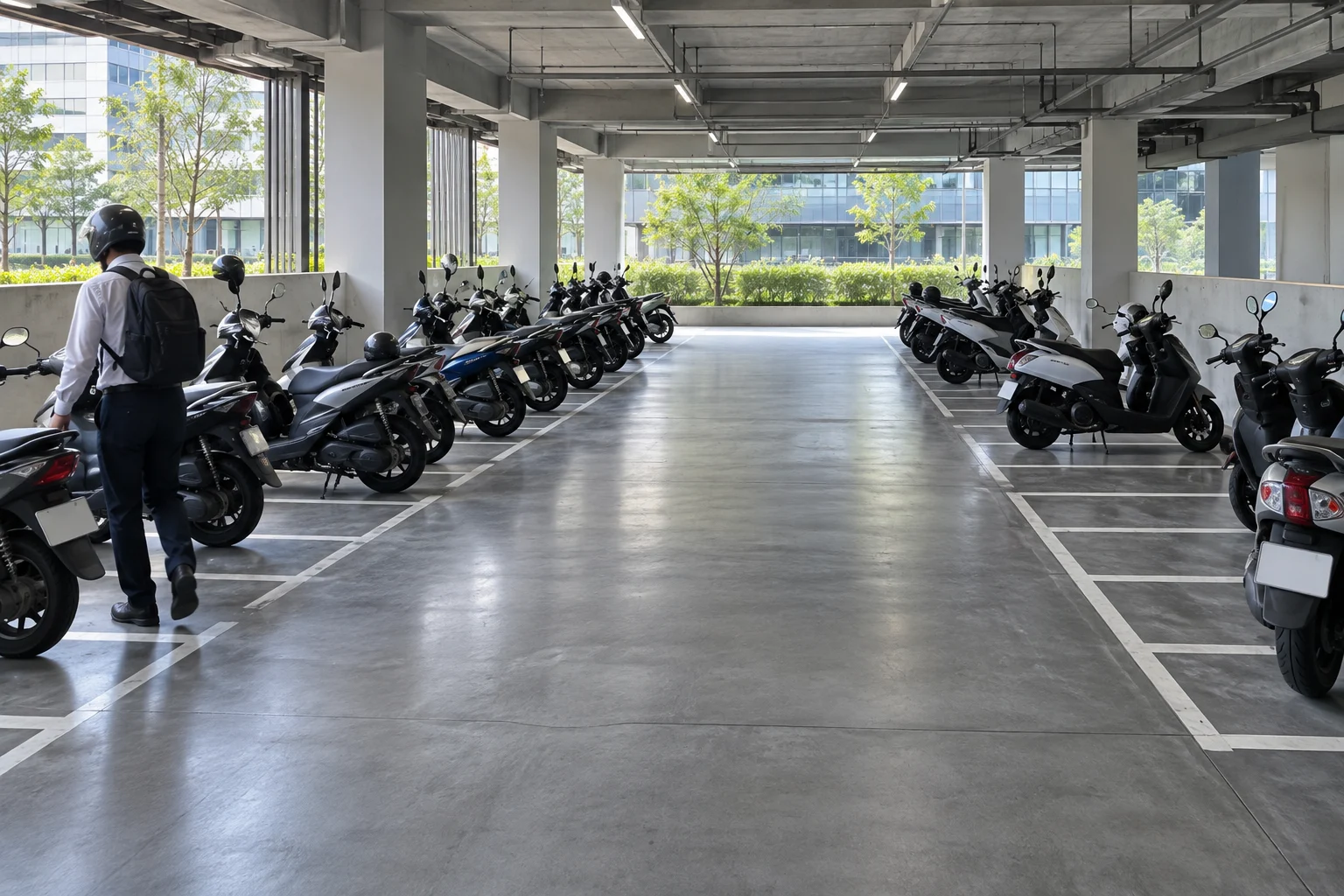
Help employees find spaces during shift changes and morning arrivals. Support separate employee and visitor areas and alternative routing when a zone fills.
Review shift patterns, peak arrivals, zone capacity, entrance displays and walking routes.
Shopping centres and department stores
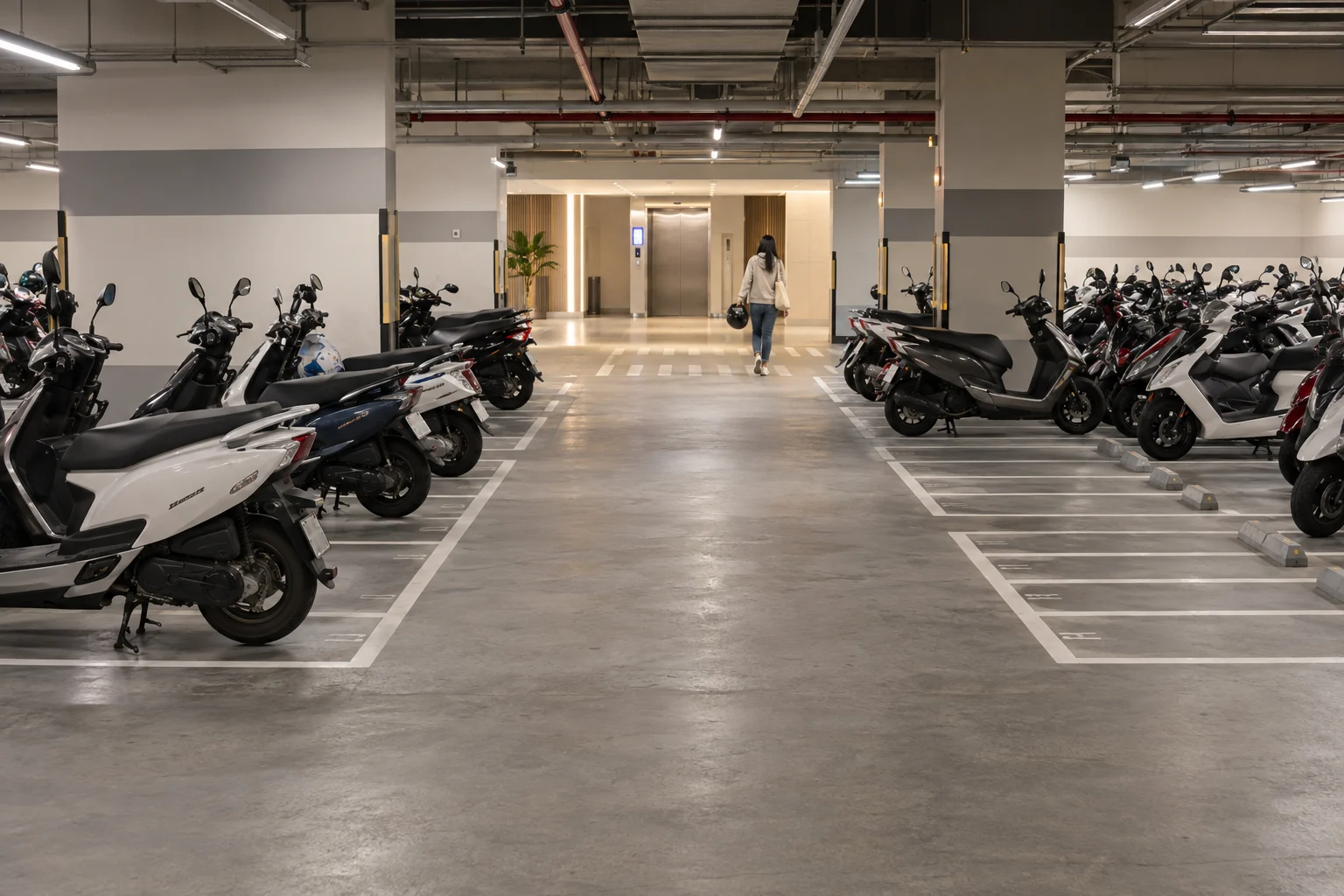
Give shoppers availability information before they circulate through the parking area. Use local indicators to support weekend, promotion and event traffic.
Review turnover, display visibility, floor information and pedestrian routes.
Schools and university campuses
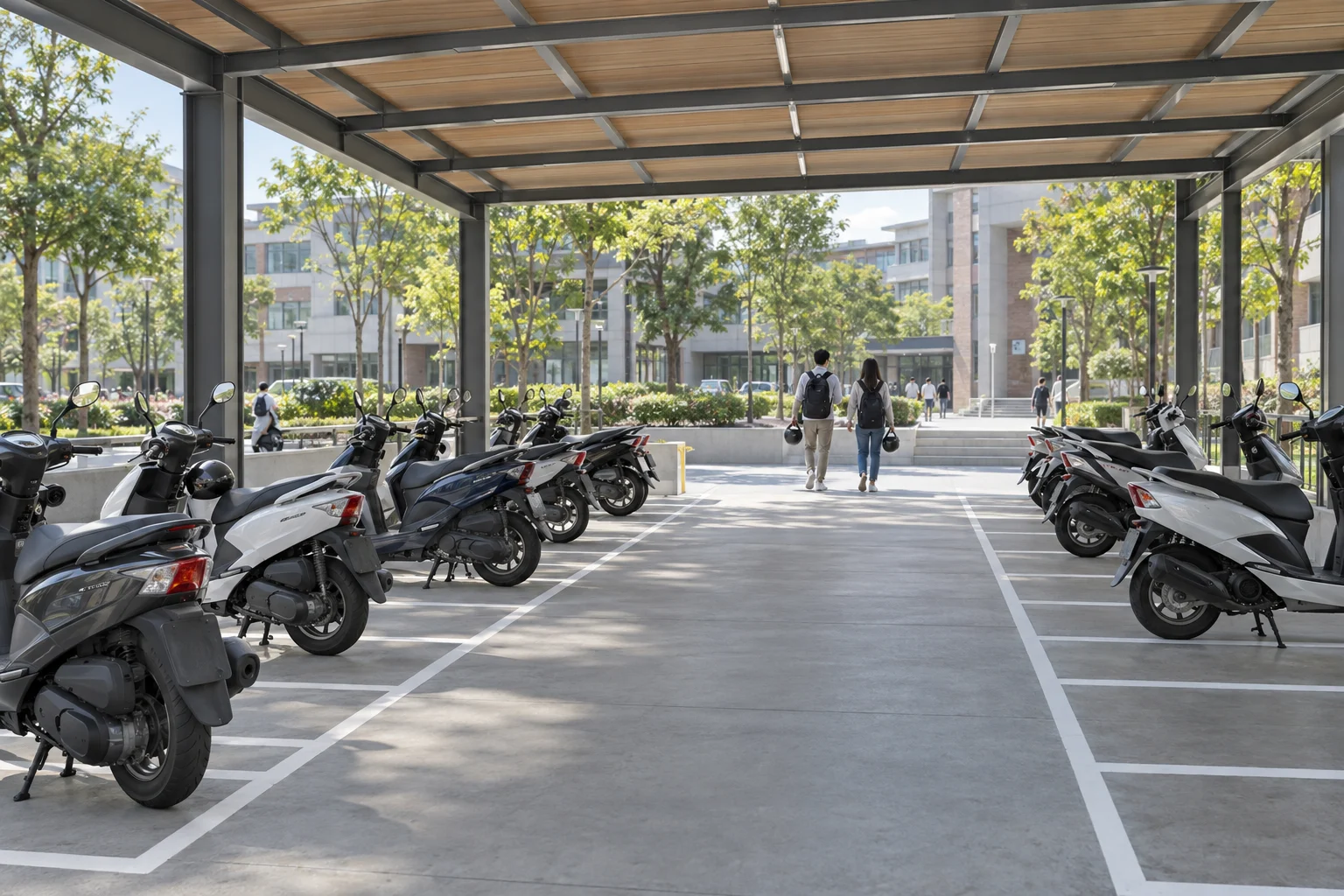
Help students and staff locate motorcycle spaces during class-change peaks. Support parking-zone allocation for students, staff and visitors.
Review timetable peaks, zone boundaries, building exits and event requirements.
Visible information at each parking space
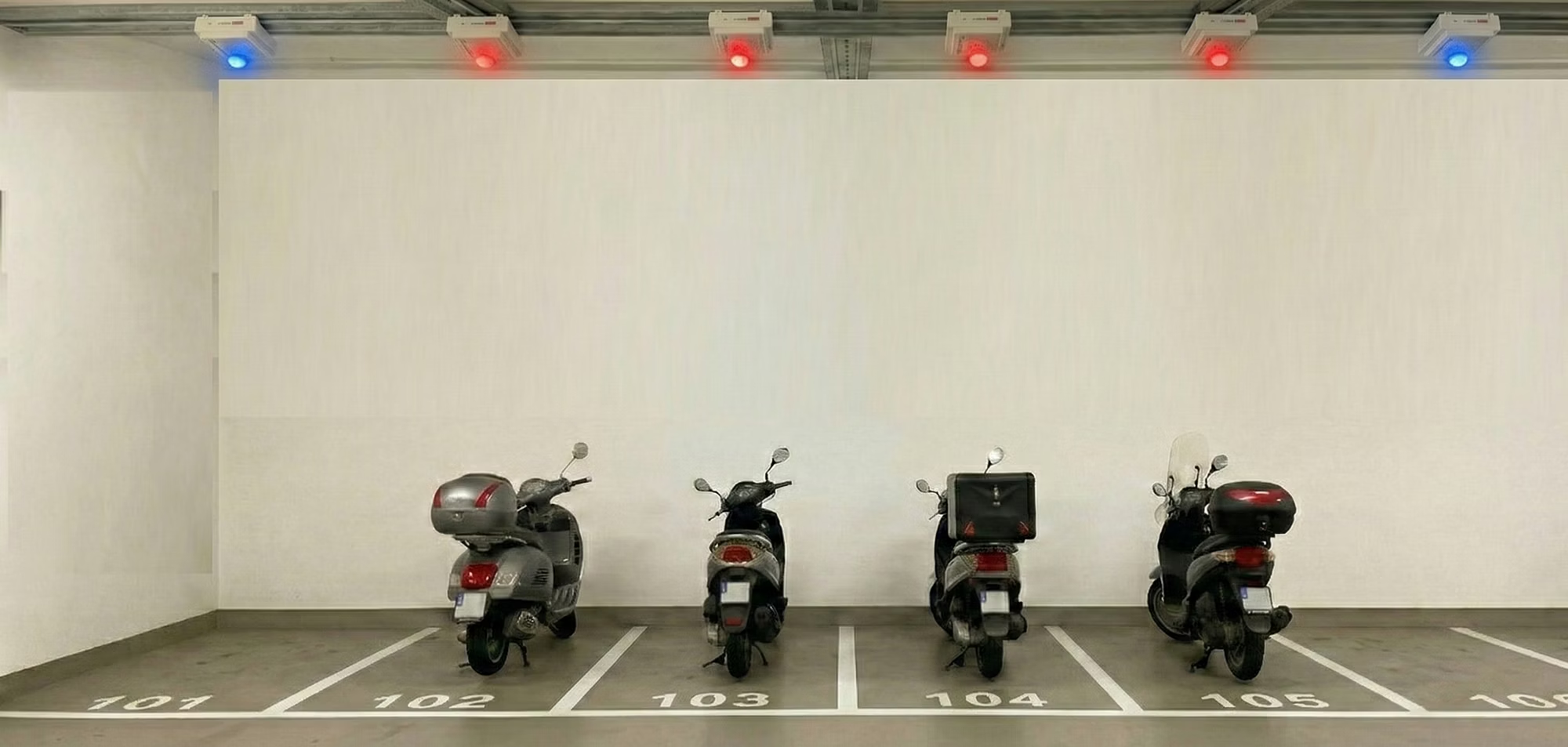
The existing solution uses red for occupied and blue for available spaces. Agree a consistent status definition across lights, entrance displays and the management interface. Colours, reporting intervals and display behaviour depend on project configuration.
Riders can use on-site information to find spaces. App access, reservations and other integrations require separate project planning.
Motorcycle controller and wireless bridge photographs
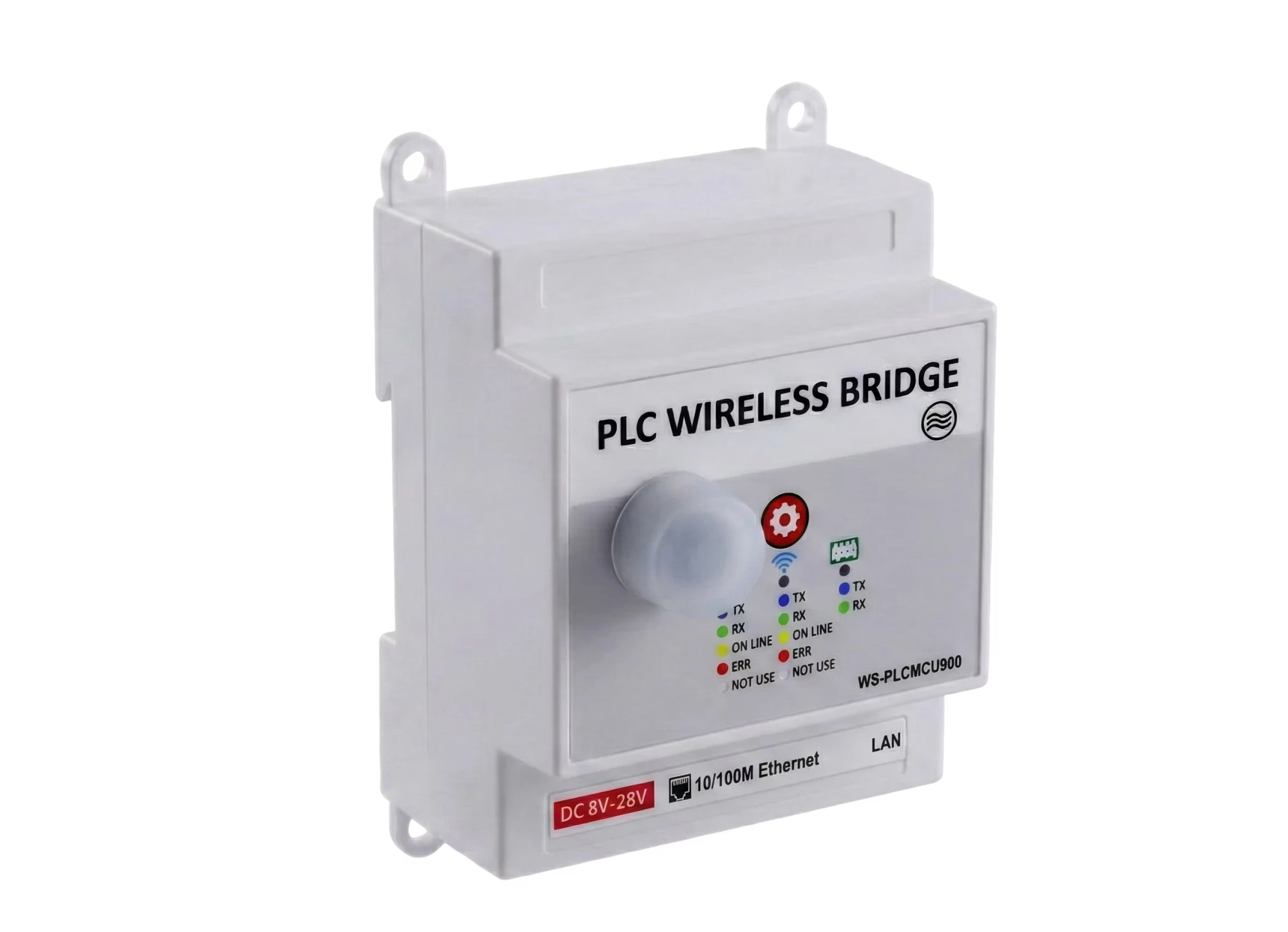
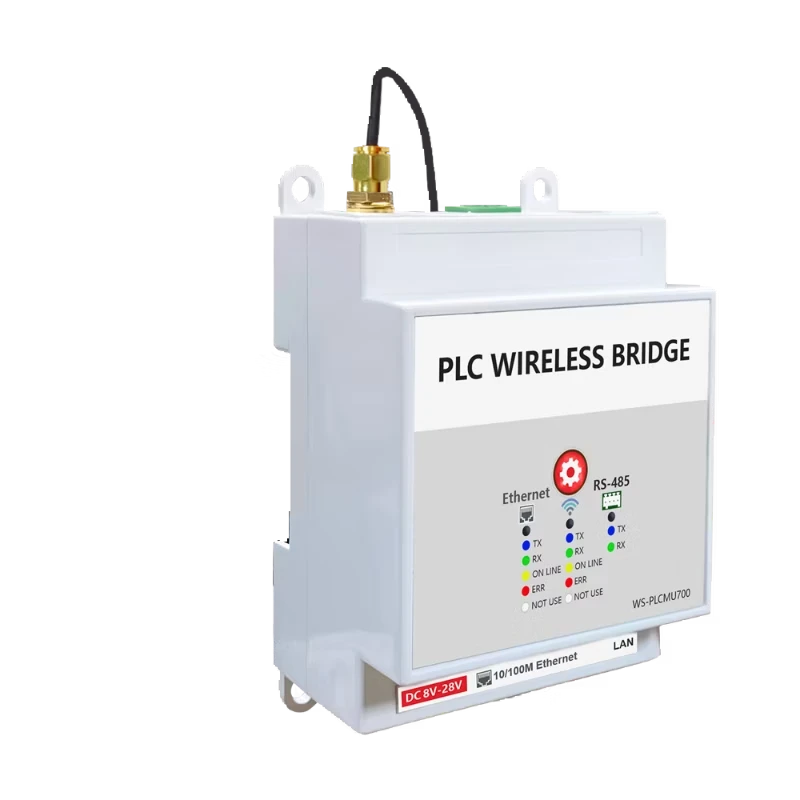
Original solution equipment photographs show the controller and wireless bridge separately. Confirm supplied components, mounting and versions in the project quotation.
How sensors, gateways, displays and management work together
| Component | Role and planning considerations |
|---|---|
| Rail-mounted space sensor | Detect occupancy at a designated motorcycle bay and map readings to a unique location. Position around bay width, mounting height and obstructions. |
| Wireless mesh and gateway | Collect point data and return it to management. Plan coverage around floors, metal shielding, point count and reporting requirements. |
| Entrance and zone displays | Show remaining motorcycle spaces before riders choose a route. |
| Management interface | Review status, history and usage data. Confirm reporting, permissions, retention and integration scope for the supplied platform. |
Wireless reporting reduces signal cabling at individual spaces. Power, gateway networking and display wiring still depend on the supplied configuration.
Specify the site and supplied configuration
This solution centres on rail-mounted space sensing. Confirm the sensing method, working distance, mounting angle, power and interfaces against the quoted hardware version and a site pilot.
Spaces and detection
Review bay dimensions, motorcycle types, angled parking and vehicles crossing bay markings. Test interaction between adjacent spaces.
Installation and communications
Confirm rail mounting, power, obstructions, gateway positions, network access and maintenance clearance.
Information and response
Define light states, update timing, display zones, offline handling and manual guidance procedures.
Measure the improvement in actual use
Start with one pilot area and compare peak-hour search time, zone occupancy, entrance queues and manual inspection workload before and after deployment. Use the findings to plan expansion and adjust guidance positions.
Results depend on layout, parking demand, indicator visibility and rider behaviour. Assess improvement using site measurements.
Deployment process
- Define requirements: site type, floors, spaces, peak periods and current management.
- Plan the layout: sensors, lights, entrance displays, power and gateways.
- Run a pilot: test empty and occupied spaces, different parking positions, updates and offline handling.
- Deploy by zone: map locations, configure displays and management, and train operators.
- Review results: compare usage and search records and refine guidance.
Procurement FAQ
How does this differ from entrance counting?
Entrance counting measures arrivals and departures. Individual-space detection provides location and zone status for local indicators and more specific guidance.
Can it serve shopping centres and campuses?
It can be assessed for sites with concentrated motorcycle parking and peak-time search demand. Plan around bay layouts, installation conditions and pedestrian routes.
Will every motorcycle be detected under every condition?
Test different vehicle types, parking angles, obstructions and cross-bay parking during the pilot. Agree acceptance criteria and exception handling.
Does each space require a new signal cable?
Wireless mesh reporting reduces individual-space signal cabling. Power, gateway networking and displays still require configuration-specific planning.
Can existing parking systems and displays be integrated?
Review data formats, reporting intervals, display requirements and interfaces with both system providers.
What is needed for a quotation?
Provide the business, retail or campus application, layout, point count, mounting height, power and network conditions, peak-hour issues and required display and management functions.
Plan a motorcycle parking area that is easier to navigate
Place availability information where employees, shoppers and students need to make their next routing decision.
Contact WENSHING Electronics